Got a tree that worries you? Maybe it’s a pine leaning toward the roof, an oak dropping dead limbs on the driveway, or a stump you’re tired of mowing around. At Hot Springs Tree Service Co., we handle tree removal, tree trimming, stump grinding and storm cleanup for homes in and around Hot Springs.
Trees here have it rough. The hillsides are steep and rocky, spring storms come through with straight-line winds, an occasional winter ice storm loads every branch, and a dry late summer stresses even healthy oaks. A tree that looked fine last year is worth a second look this year.
Every job starts the same way. You call or send the form, we come out and look at the tree, and you get a free quote before any work starts.
Not sure what the tree needs, or whether it needs anything at all? That’s the usual starting point. Having it looked at is free, and you decide what happens next.
You can read more about tree removal, tree trimming, stump grinding and emergency storm work on their own pages.
Call 501-817-7761 or fill out the form. If a tree is already down, please call rather than using the form.
Free quote. No obligation.
Most tree work comes down to one of four jobs.


Nobody likes losing a big tree, and plenty of trees that look bad can be saved with a good trim. Some can’t. A pine that’s dead at the top, an oak with a hollow base, a trunk that started leaning after the last storm, or roots lifting a walkway: those are the ones worth having looked at.
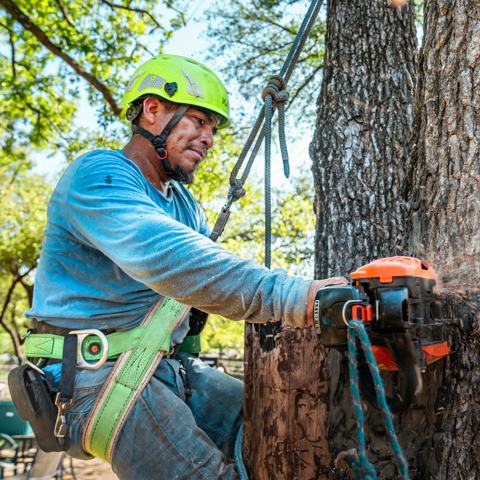
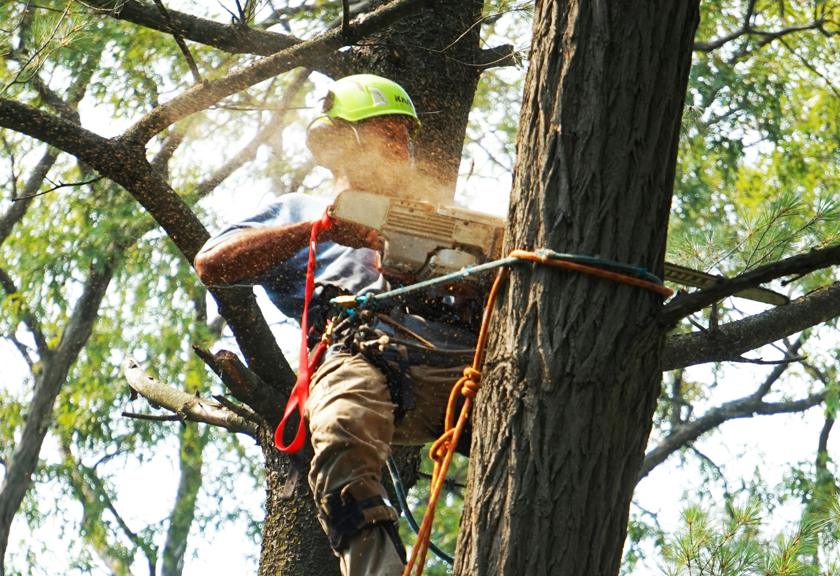
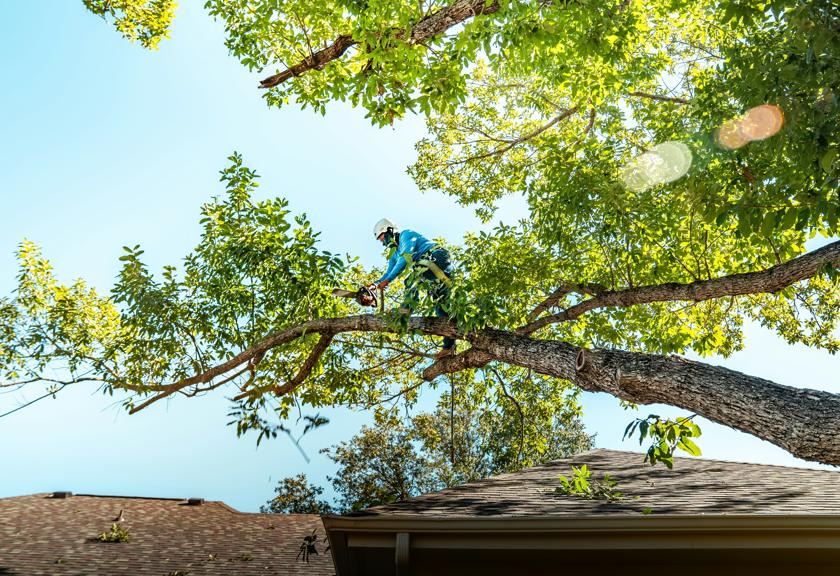
Tree cutting in Hot Springs is rarely a simple matter of dropping the tree in the yard. Houses sit close together in the older neighborhoods, lake lots slope toward the water, and there’s often a fence, a deck or a neighbor’s roof underneath. So most trees near a house come down in pieces. A climber works from the top, cutting sections and lowering them on ropes. Depending on the tree and the access, the work may also be done from a lift or with a crane.
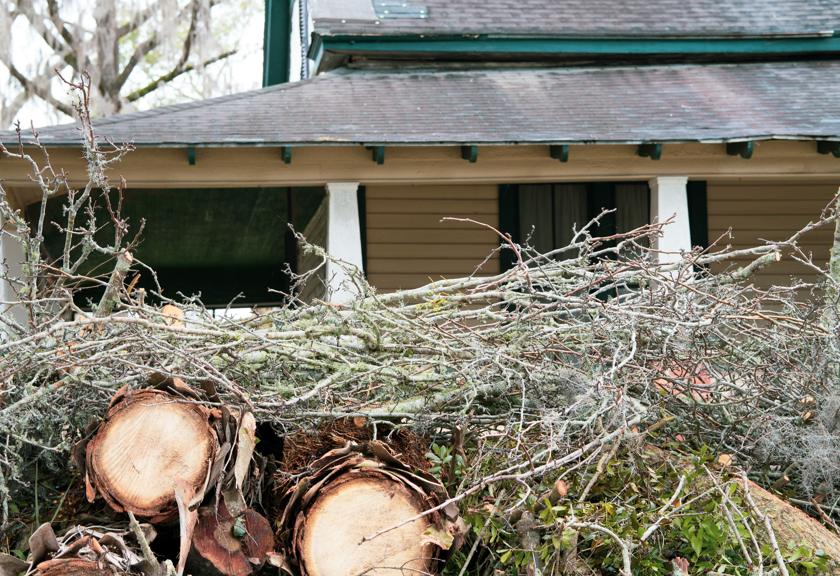
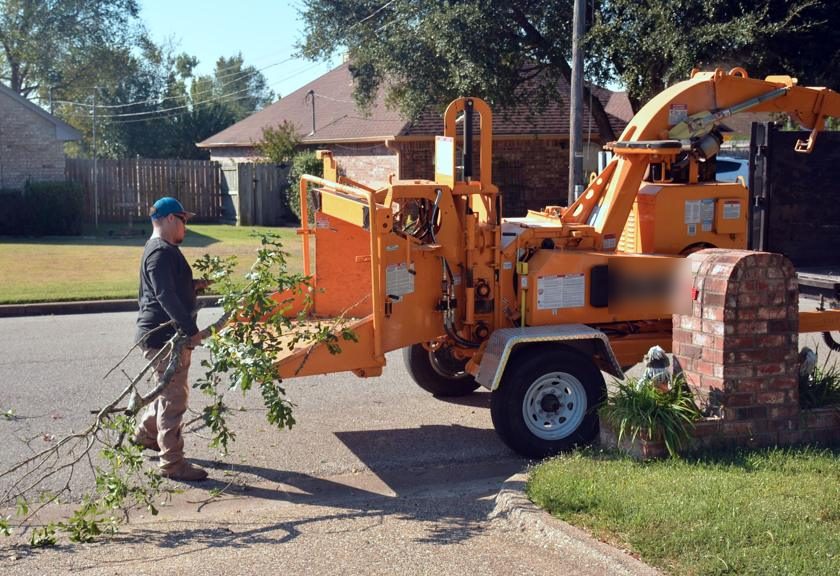
Once the tree is on the ground, the brush is chipped and the wood is cut up and hauled, unless you’d like to keep it for firewood. Tell us what you want done with the wood when we talk. Read more on the tree removal page, or call 501-817-7761 to have a tree looked at.
Trimming is the part of tree care that heads off a lot of the trouble people call about later. Limbs resting on shingles can wear through a roof. Branches over the driveway can come down in an ice storm. Dead wood in the crown can fall on a calm day.
Good tree pruning is more than cutting whatever is in reach. A cut made just outside the branch collar lets the tree seal over the wound. Taking too much of the crown at once weakens a tree. And topping, where the top is cut flat, forces out weak shoots that break off later and leaves the tree worse off than before.
Timing matters too. Oaks are best pruned in the cold months, while they’re dormant. Heavy work on pines is also better in cool weather, because fresh cuts in summer can draw bark beetles. Dead, broken or hanging limbs are the exception and can come out at any time of year. See the tree trimming page for more.
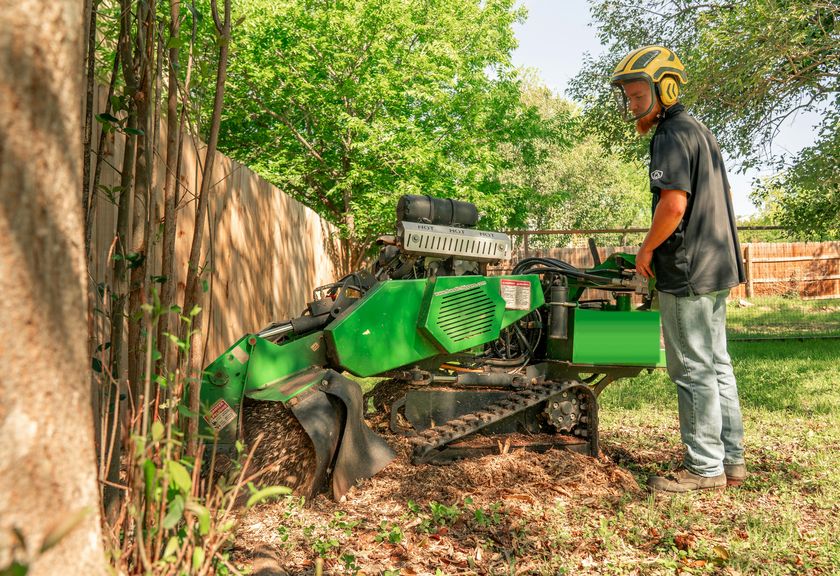
A stump left behind is more than an eyesore. It sprouts, it rots, and it’s in the way of the mower. A stump grinder chews the stump down below the level of the lawn and leaves a pile of wood chips where it stood.
The chips can be used as mulch in a flower bed or hauled off. If you want grass there, most of the chips should come out and topsoil should go in. If you plan to plant a new tree, pour concrete or build on that spot, say so when we talk, because that changes how the stump should be handled.
Most people who ask for stump removal want the stump ground out. Digging out the whole root ball is a much bigger job and is mainly for construction. Details are on the stump grinding page.
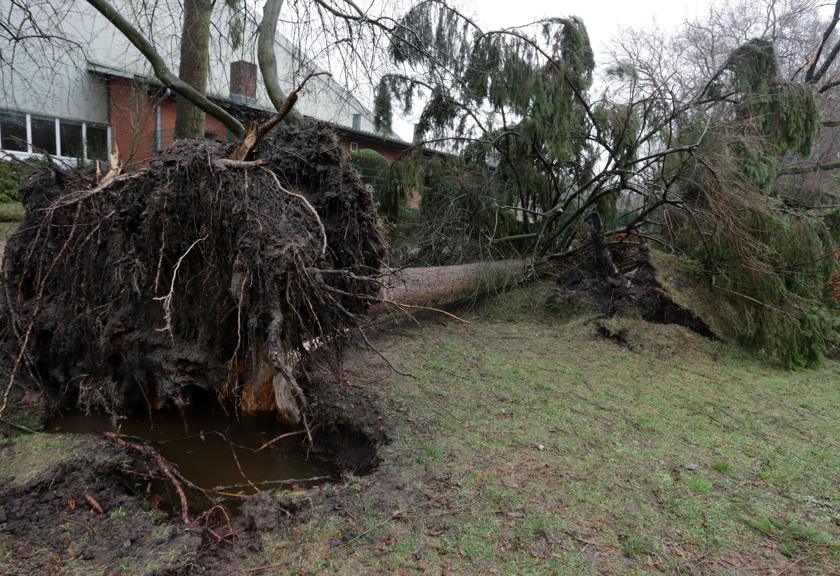
Tree on your house, car or driveway? If anyone is hurt or trapped, or there’s a fire, call 911. If a power line is involved, stay far away from it and report it to your power company. Then call 501-817-7761.
When a storm puts a tree on a roof, the first job is to stop the damage from spreading. That means getting the weight off the house without dropping it further.
Storm-damaged trees are under tension in ways that aren’t obvious. A trunk pinned across a roof or a limb bent under another tree can spring loose when it’s cut. This is work for a crew with rigging gear, not for a homeowner with a chainsaw.
Take photos before anything is moved, and call your insurer to ask what your policy covers. More on what to do first is on the emergency tree service page.


If you call, tell us what the tree is doing and where it stands. It helps to mention how tall it is, what’s underneath it, and whether a truck can get close. If you send the form, those details can wait until we talk.
We walk around the tree with you, look at what’s under it and how equipment can reach it, and give you a free quote. This is the time to say whether you want the stump ground and what you’d like done with the wood.
The tree is trimmed or taken down, the brush is chipped, and the wood is hauled or left for you, whichever you asked for. Walk the yard afterward and say so if anything was missed.
Every tree is different, so there’s no honest price without seeing it. The quote is free. Here’s what decides the price of each kind of job, so you know what we’ll be looking at when we come out:
| Job | What decides the price |
|---|---|
| Tree trimming | Height of the tree, how much comes off, and what’s underneath |
| Tree removal | Size, access for equipment, what’s underneath, lean, nearby power lines, and the condition of the wood |
| Stump grinding | Stump width, surface roots, access, and how many stumps |
| Storm damage | What the tree landed on and how it has to be taken apart |
Three things make a job harder than anything else: a tree that can’t be reached with a truck, a tree that’s already dead (dead wood is brittle and risky to climb), and anything hanging over a house or a power line. If you have more than one tree or stump, mention them all so they can be quoted together.
A quote should spell out what is in it. Ask whether it covers taking the tree down only, or also chipping the brush, removing the logs and grinding the stump. Two prices for the same tree are only comparable when they describe the same work.
The only number that counts is the quote for your tree. Call 501-817-7761 and we’ll come out and give you one for free.
A few things are worth settling with any tree company before the cutting starts.
Bring these up when we come out to look at your tree.
Hot Springs sits in the Ouachita Mountains, and the trees show it: oaks and hickories mixed with shortleaf pine on rocky slopes. They’re a large part of why people love living here. They’re also why tree work here is seldom simple.
Spring is storm season. Severe thunderstorms bring straight-line winds and the occasional tornado, and saturated ground plus high wind is what brings tall trees down whole. Winter ice storms are less frequent, but ice loads every limb at once. A dry late summer doesn’t knock trees down by itself, but it weakens them, and stressed oaks can develop Hypoxylon canker, which kills the tree and leaves the wood brittle.
Bradford pears are known for splitting in wind and ice. Pines draw bark beetles, and sawdust and small holes in the bark are the signs. If you see those signs on a pine, or bark sloughing off an oak, have the tree looked at.
Shallow, rocky soil is part of the picture. On a hillside lot, roots spread wide instead of deep, and a tree at the top of a cut bank or beside a retaining wall has less to hold on to than one on flat ground. After a week of heavy rain, those are the trees to keep an eye on.
We cover Hot Springs and the surrounding area. In town that includes Oaklawn, Park Avenue, Whittington and the Quapaw-Prospect area. Outside town it includes Lake Hamilton, Piney, Rockwell, Fountain Lake, Royal, Pearcy, Mountain Pine and Hot Springs Village.
Homes on Lake Hamilton and Lake Catherine often sit on steep lots, where a tree may have to come down in small pieces and be carried out by hand. The shoreline of both lakes is managed by Entergy, so check before cutting a tree right at the water’s edge. If you’re not sure whether we come out your way, call 501-817-7761 and ask.
The work changes from one part of town to another. On the older streets near Oaklawn and Park Avenue, large trees stand close to houses and overhead lines, so most of them are taken apart in pieces. In Hot Springs Village and around the lakes the lots are bigger but steeper, and getting equipment to the tree is usually the hard part.
Call 501-817-7761 or fill out the form and tell us what’s going on. We’ll set up a time to come out, look at the tree and give you a free quote. If a tree is down on a house, a car or a driveway, please call rather than using the form.
It depends on where the tree stands, so check before you cut. For a tree between the sidewalk and the street, check with the City of Hot Springs first. Homeowners in Hot Springs Village should check with the property owners’ association, and a tree at the water’s edge on Lake Hamilton or Lake Catherine is worth a call to Entergy, which manages both shorelines. Trees on Hot Springs National Park land are not yours to cut.
On a typical job the brush is chipped and the wood is hauled away. If you’d like to keep the firewood or have the chips left for mulch, tell us when we talk so your quote reflects it. Stump grinding is a separate job, so ask for it if you want the stump gone too.
Not for a homeowner. If a limb is touching a line or a tree has pulled one down, stay well back, keep away from anything the line is touching, and report it to your power company. If a tree is only close to a line, tell us when we talk.
Yes. We cover Hot Springs, the lake areas, Hot Springs Village and other nearby communities. Coverage outside town varies, so if you’re not sure whether we come out your way, call 501-817-7761 and ask.